OpenResty安装-(基于Nginx的高性能Web平台,可在Nginx端编码业务)
OpenResty安装-(基于Nginx的高性能Web平台,可在Nginx端编码业务)
安装OpenResty
1.安装
首先你的Linux虚拟机必须联网,如果没有联网可以使用跳板机进行代理
1)安装开发库
首先要安装OpenResty的依赖开发库,执行命令:
yum install -y pcre-devel openssl-devel gcc --skip-broken2)安装OpenResty仓库
你可以在你的 CentOS 系统中添加 openresty 仓库,这样就可以便于未来安装或更新我们的软件包(通过 yum check-update 命令)。运行下面的命令就可以添加我们的仓库:
yum-config-manager --add-repo https://openresty.org/package/centos/openresty.repo如果提示说命令不存在,则运行:
yum install -y yum-utils然后再重复上面的命令
3)安装OpenResty
然后就可以像下面这样安装软件包,比如 openresty:
yum install -y openresty4)安装opm工具
opm是OpenResty的一个管理工具,可以帮助我们安装一个第三方的Lua模块。
如果你想安装命令行工具 opm,那么可以像下面这样安装 openresty-opm 包:
yum install -y openresty-opm5)目录结构
默认情况下,OpenResty安装的目录是:/usr/local/openresty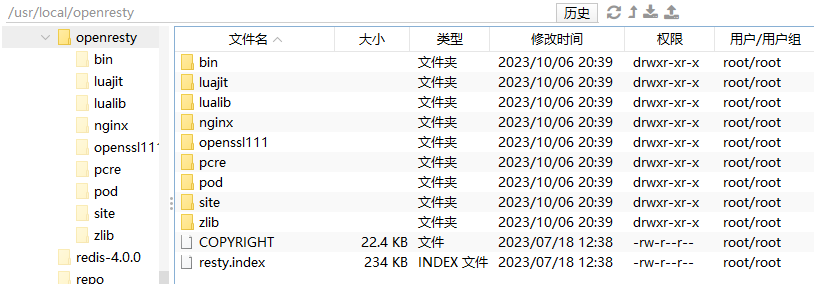
看到里面的nginx目录了吗,OpenResty就是在Nginx基础上集成了一些Lua模块。
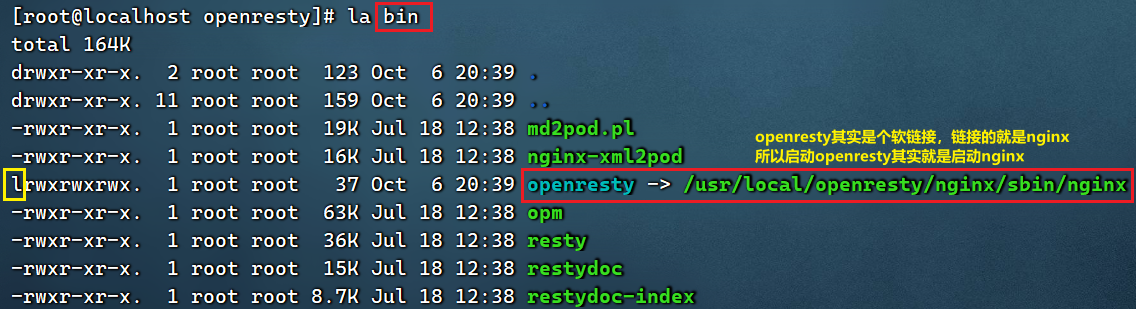
继续查看bin目录:"linux链接文件 “l”是链接文件,l是link的意思。 相当于windows的快捷方式;”

6)配置nginx的环境变量
打开配置文件:
vim /etc/profile在最下面加入两行:
export NGINX_HOME=/usr/local/openresty/nginx
export PATH=${NGINX_HOME}/sbin:$PATH
NGINX_HOME:后面是OpenResty安装目录下的nginx的目录
然后让配置生效:
source /etc/profile2.启动和运行
OpenResty底层是基于Nginx的,查看OpenResty目录的nginx目录,结构与windows中安装的nginx基本一致:
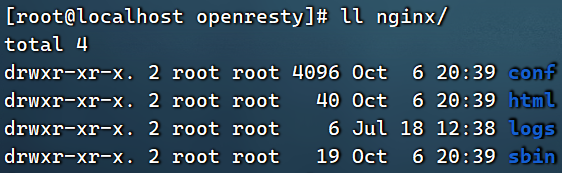
所以运行方式与nginx基本一致:
# 启动nginx
nginx
# 重新加载配置
nginx -s reload
# 停止
nginx -s stop
nginx的默认配置文件注释太多,影响后续我们的编辑,这里将nginx.conf中的注释部分删除,保留有效部分。
修改
/usr/local/openresty/nginx/conf/nginx.conf文件,内容如下:
其实就是把初始nginx.conf的配置文件里所有的注释给删除了,看起来清爽多了
#user  nobody;
worker_processes  1;
error_log  logs/error.log;

events {
    worker_connections  1024;
}

http {
    include       mime.types;
    default_type  application/octet-stream;
    sendfile        on;
    keepalive_timeout  65;

    server {
        listen       8081;
        server_name  localhost;
        location / {
            root   html;
            index  index.html index.htm;
        }
        error_page   500 502 503 504  /50x.html;
        location = /50x.html {
            root   html;
        }
    }
}
在Linux的控制台输入命令以启动nginx:
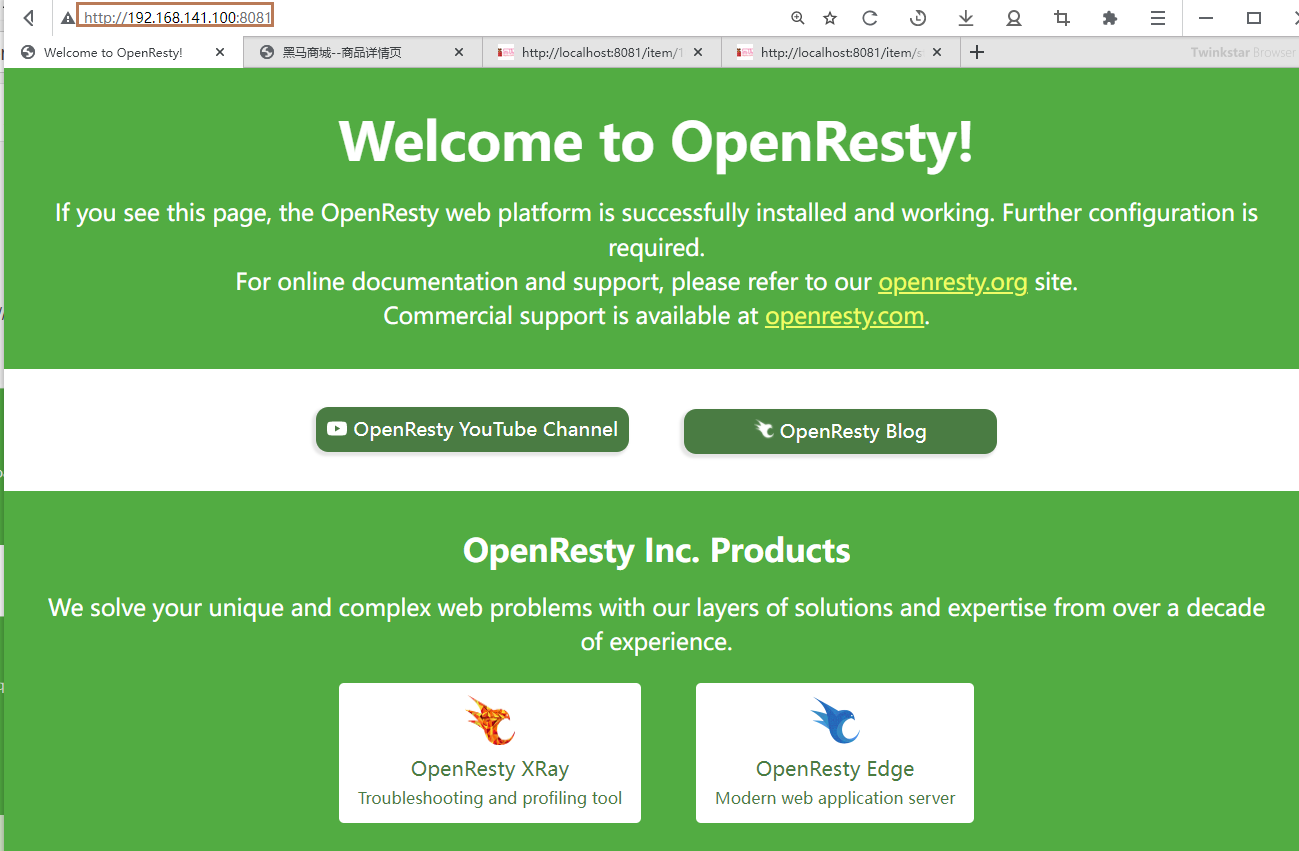
nginx然后访问页面:http://192.168.141.100:8081 ,注意ip地址替换为你自己的虚拟机IP:
nginx.conf配置文件里面改成了监听8081端口,所以这里访问8081端口
3.备注
加载OpenResty的lua模块:
#lua 模块
lua_package_path "/usr/local/openresty/lualib/?.lua;;";
#c模块
lua_package_cpath "/usr/local/openresty/lualib/?.so;;";
common.lua
-- 封装函数,发送http请求,并解析响应
local function read_http(path, params)
    local resp = ngx.location.capture(path,{
        method = ngx.HTTP_GET,
        args = params,
    })
    if not resp then
        -- 记录错误信息,返回404
        ngx.log(ngx.ERR, "http not found, path: ", path , ", args: ", args)
        ngx.exit(404)
    end
    return resp.body
end
-- 将方法导出
local _M = {
    read_http = read_http
}
return _M
释放Redis连接API:
-- 关闭redis连接的工具方法,其实是放入连接池
local function close_redis(red)
    local pool_max_idle_time = 10000 -- 连接的空闲时间,单位是毫秒
    local pool_size = 100 --连接池大小
    local ok, err = red:set_keepalive(pool_max_idle_time, pool_size)
    if not ok then
        ngx.log(ngx.ERR, "放入redis连接池失败: ", err)
    end
end
读取Redis数据的API:
-- 查询redis的方法 ip和port是redis地址,key是查询的key
local function read_redis(ip, port, key)
    -- 获取一个连接
    local ok, err = red:connect(ip, port)
    if not ok then
        ngx.log(ngx.ERR, "连接redis失败 : ", err)
        return nil
    end
    -- 查询redis
    local resp, err = red:get(key)
    -- 查询失败处理
    if not resp then
        ngx.log(ngx.ERR, "查询Redis失败: ", err, ", key = " , key)
    end
    --得到的数据为空处理
    if resp == ngx.null then
        resp = nil
        ngx.log(ngx.ERR, "查询Redis数据为空, key = ", key)
    end
    close_redis(red)
    return resp
end
开启共享词典:
# 共享字典,也就是本地缓存,名称叫做:item_cache,大小150m
lua_shared_dict item_cache 150m;
4.问题
warning: /var/cache/yum/x86_64/7/openresty/packages/openresty-openssl111-1.1.1w-1.el7.x86_64.rpm: Header V4 RSA/SHA1 Signature, key ID d5edeb74: NOKEY
Retrieving key from https://openresty.org/package/pubkey2.gpg